If your home feels cold in winter despite the furnace running hard, if your energy bills seem higher than they should be, or if you have noticed ice dams forming at your eaves after a snowfall, there is a good chance your attic insulation is not doing the job it needs to do. For a large number of homes across Alberta, the issue is not a failing heating system or drafty windows. It is an attic that is losing heat faster than the rest of the home can generate it.
Blown-in insulation is one of the most effective and cost-efficient ways to address that problem. It can be installed in an afternoon, it covers the irregular shapes and tight spaces that batt insulation cannot reach, and it delivers a meaningful improvement in energy performance that most homeowners feel immediately in their comfort and their heating bills.
This guide explains what blown-in insulation is, how it works, why the attic is the most important place to insulate in an Alberta home, and what to expect from a professional installation.
What Is Blown-In Insulation?
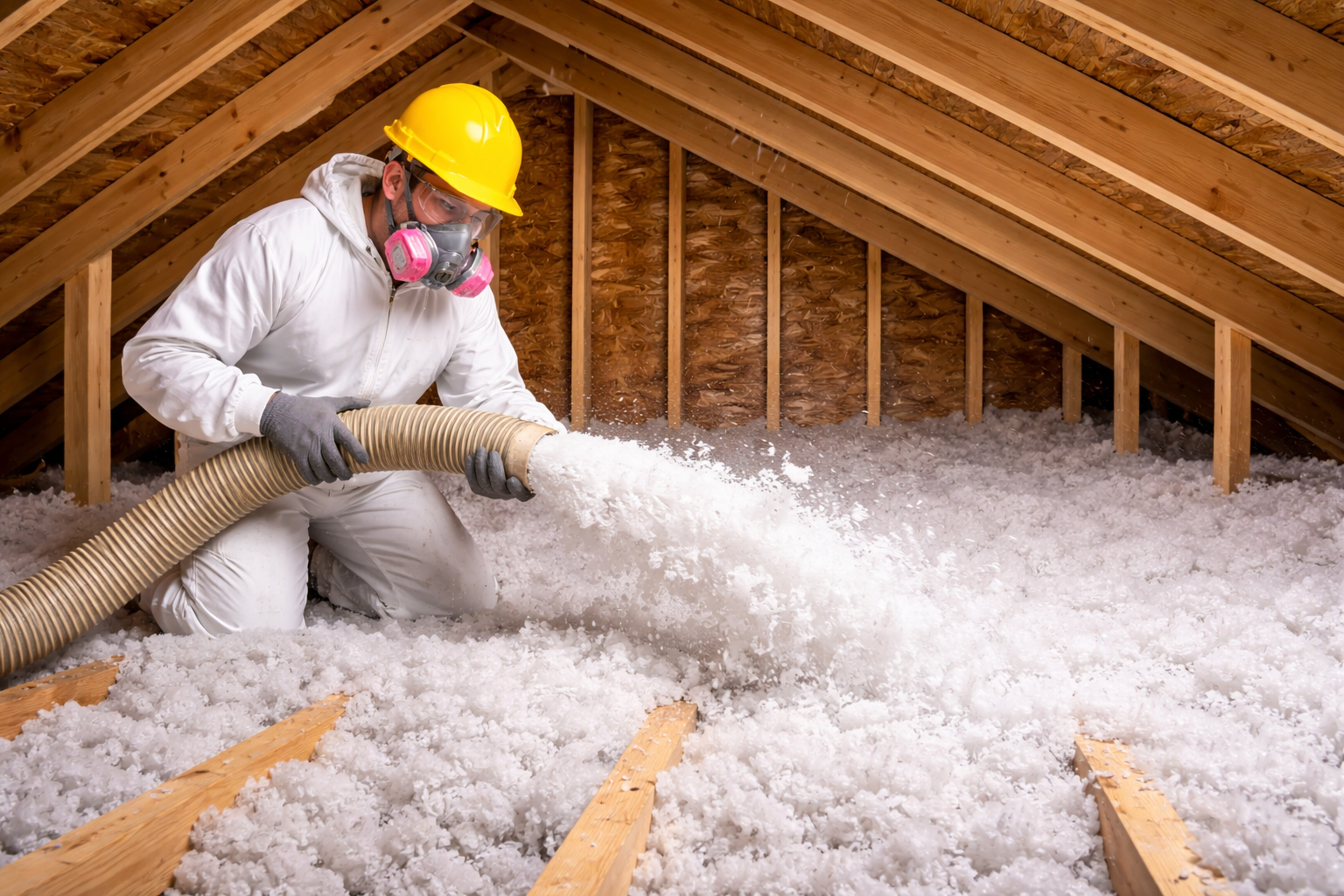
Blown-in insulation, also called loose-fill insulation, is a type of insulation material that is installed using a blowing machine rather than being rolled out in pre-cut batts or rigid boards. The insulation material is loaded into a large hopper, shredded into small particles or fibres, and then blown through a flexible hose into the space being insulated. The loose material settles and fills the space evenly, conforming to irregular shapes, filling gaps around framing members, and covering the entire area without the voids and compressions that are common with batt installation.
The two most common materials used for blown-in insulation in residential attics are cellulose and fibreglass. Each has its strengths and the right choice depends on the specific conditions of your attic and your priorities as a homeowner.
Blown-In Cellulose
Cellulose insulation is made primarily from recycled paper fibre, typically newsprint, that has been treated with fire retardant and pest-resistant chemicals. It is a dense material with good thermal performance and excellent ability to fill irregular spaces and gaps. Cellulose has a relatively high resistance to air movement, which means it contributes to air sealing as well as thermal insulation, a meaningful benefit in Alberta’s cold winters where air infiltration is a significant source of heat loss.
Cellulose is also a heavier material than fibreglass, which means it stays in place effectively and does not settle as dramatically over time. It is widely considered the better choice for attics that already have some insulation present and where a top-up installation needs to fill in and cover existing material thoroughly.
Blown-In Fibreglass
Blown-in fibreglass is made from spun glass fibres and is lighter and less dense than cellulose. It has excellent thermal performance per inch of thickness and does not absorb moisture, which makes it well suited to attic environments where humidity could be a concern. Fibreglass blown-in insulation settles somewhat more over time than cellulose but modern products are designed to minimize this effect, and the settled R-value is factored into installation thickness recommendations.
Fibreglass is often the preferred choice for new construction attics or situations where the attic framing and structure need to support minimal additional load, as its lighter weight puts less stress on the ceiling below.
Why the Attic Is the Most Important Place to Insulate
Heat rises. In a home with an inadequate attic, that is exactly what your heating dollars are doing every winter: rising through the ceiling, into the attic, and eventually out through the roof. The attic is the primary pathway for heat loss in most residential homes and it is the most direct place to intervene.
In Alberta, where heating degree days are among the highest in Canada and natural gas and electricity costs have risen steadily in recent years, the thermal performance of your attic insulation has a direct and measurable effect on your monthly energy costs. Homes with poorly insulated attics routinely spend significantly more on heating than comparable homes with properly insulated attics, often in the range of hundreds of dollars per year.
Beyond the energy cost argument, there are two other consequences of an under-insulated attic that are particularly relevant to Alberta homeowners.
Ice Dams
Ice dams are one of the most common and most damaging consequences of poor attic insulation in cold climates. They form when warm air escaping from the living space heats the attic enough to melt snow on the roof above. That meltwater runs down the slope of the roof toward the cold eaves, where it refreezes and builds up into a ridge of ice. As more meltwater accumulates behind the ice dam, it eventually backs up under the shingles and into the roof structure, causing water damage to sheathing, insulation, and interior ceilings.
The root cause of ice dams is almost always an attic that is too warm relative to the outside temperature, which points directly to insufficient insulation and inadequate ventilation. Adding proper blown-in insulation to the attic floor reduces the amount of heat escaping from the living space into the attic, keeping the attic temperature closer to the outdoor temperature and eliminating the conditions that cause ice dams to form. For homeowners who have dealt with ice dams repeatedly, proper attic insulation is the most effective and permanent solution available.
Comfort Throughout the Home
An under-insulated attic does not just affect your heating bill. It affects how comfortable your home feels throughout the winter. Rooms on the top floor of a home with a poorly insulated attic are often noticeably colder than the rest of the house, particularly near exterior walls and in areas below roof slopes. Cold ceilings radiate cold into the rooms below, making the space feel drafty and uncomfortable even when the thermostat is set to an adequate temperature.
After a blown-in insulation upgrade, the improvement in comfort on the top floor of a home is typically immediate and significant. The ceiling surface temperature rises, cold spots near exterior walls diminish, and the heating system runs more efficiently because the heat it generates stays in the living space longer rather than escaping through the attic.
How Much Insulation Does an Alberta Attic Need?
Insulation performance is measured in R-value, which quantifies the material’s resistance to heat flow. The higher the R-value, the better the insulation performs. For attics in Alberta’s climate zone, the current recommendation from Natural Resources Canada and the National Building Code is a minimum of R-50 for attic insulation, with many energy efficiency programs and building science professionals recommending R-60 or higher for new construction and major retrofits.
Many older homes across the Edmonton and Parkland County area were originally built with significantly less insulation than current standards recommend. Homes built in the 1970s and 1980s commonly have R-12 to R-20 in the attic, which is less than half of what current standards call for. Even homes built in the 1990s and early 2000s often have R-30 to R-40, which still falls short of current best practice.
A professional assessment of your attic will determine the current R-value of your existing insulation and identify how much additional material needs to be added to bring it to the recommended level. Blown-in insulation is ideal for this kind of top-up installation because it can be added directly over existing insulation to any required depth without the disruption of removing and replacing what is already there.
What Does a Blown-In Insulation Installation Involve?
One of the practical advantages of blown-in insulation is how straightforward the installation process is relative to the improvement it delivers. A professional installation in a typical residential attic can usually be completed in a single day with minimal disruption to the home.
Pre-Installation Assessment
Before installation begins, a professional contractor will assess the current state of the attic. This includes measuring the existing insulation depth and estimating the current R-value, checking that attic ventilation baffles are in place at the eaves to ensure soffit vents remain unobstructed after the new insulation is added, inspecting for any air sealing work that should be done before insulation is installed, and identifying any issues such as damaged sheathing, pest activity, or moisture that need to be addressed first.
Air sealing is an often-overlooked step that significantly improves the performance of new insulation. Gaps and penetrations around pot lights, plumbing stacks, electrical boxes, and the attic hatch allow warm air to bypass the insulation entirely and flow directly into the attic space. Sealing these penetrations before blowing in new insulation ensures the thermal barrier is as complete as possible.
Installation Process
The installation itself involves running the blowing machine hose into the attic and distributing the loose-fill material evenly across the attic floor to the specified depth. Depth markers are placed throughout the attic before installation begins so the installer can confirm consistent coverage and the correct final R-value across the entire area. Baffles at the eaves ensure the insulation does not block the soffit vents, which is critical for maintaining the attic ventilation that works together with the insulation to regulate attic temperature and humidity.
The process is relatively clean, particularly compared to removing and replacing batt insulation. The material is blown in through a hose and contained within the attic space, with minimal impact on the rest of the home.
After Installation
Once the installation is complete, you should notice the improvement in comfort relatively quickly, particularly in rooms on the top floor. The full impact on heating costs becomes apparent over the first full heating season, as the reduced heat loss through the attic compounds across the weeks and months of Alberta’s winter.
A properly installed blown-in insulation upgrade will also improve the performance of your roof and roofline components. By keeping the attic cooler and reducing the temperature differential between the attic and the outdoor air, a well-insulated attic reduces the thermal stress on your shingles, extends the life of your roofing materials, and eliminates the ice dam conditions that are responsible for a significant amount of roof and interior water damage in Alberta homes.
Signs Your Attic Insulation May Need Upgrading
Not sure whether your attic insulation is adequate? Here are the indicators that most commonly point to an under-insulated attic in an Alberta home:
- Heating bills that seem disproportionately high relative to your home size and thermostat settings
- Top floor rooms that are noticeably colder than the rest of the house in winter
- Ice dams forming at the eaves after snowfall, particularly with icicles building up along the roofline
- Visible frost or condensation on the underside of the roof sheathing during cold weather
- An attic that feels noticeably warm when you access it during winter, suggesting heat is escaping from the living space below
- Existing insulation that is compressed, damaged by moisture, disturbed by pest activity, or visibly thin relative to current standards
- A home built before 1990 that has not had insulation upgrades since original construction
If any of these apply to your home, a professional attic assessment is a worthwhile step. In many cases, the improvement in energy performance from a blown-in insulation upgrade delivers a payback period of just a few years through reduced heating costs, and the improvement in comfort and protection against ice dam damage adds value that is harder to quantify but genuinely significant.
How Kirkland Roofing and Exteriors Can Help
At Kirkland Roofing and Exteriors, blown-in insulation is part of a complete approach to protecting Alberta homes from the top down. We install blown-in insulation in attics across Parkland County, Edmonton, St. Albert, Spruce Grove, Stony Plain, Sherwood Park, and Fort Saskatchewan, and we bring the same attention to detail to insulation work that we apply to every other part of the exterior system.
Our installations begin with a thorough attic assessment that identifies your current insulation levels, checks ventilation baffles, and flags any air sealing or moisture issues that should be addressed before new insulation is added. We install to the R-value appropriate for your home and Alberta’s climate requirements, using quality materials that are rated for our specific conditions.
Because we also install roofing, soffit, fascia, and gutters, we understand how the attic insulation system interacts with the rest of the roof assembly. When insulation work is coordinated with roofing and ventilation, the result is a home that performs significantly better as a complete system rather than a series of independent components.
Final Thoughts
Blown-in attic insulation is one of the highest-return upgrades an Alberta homeowner can make. It reduces heat loss, lowers heating costs, eliminates ice dam conditions, and improves comfort throughout the home, all from a single installation that can typically be completed in a day with minimal disruption.
If your home is older, if your energy bills seem high, or if you have been dealing with ice dams or cold spots on your top floor, your attic insulation is the most likely culprit and blown-in insulation is the most practical solution. Do not wait for another expensive heating season or another round of ice dam damage to take action.
Contact Kirkland Roofing and Exteriors today for a free attic assessment and quote. Call us at (780) 554-0397 or visit kirklandroofingandexteriors.ca. We serve Parkland, Edmonton, and all surrounding communities across Alberta.