
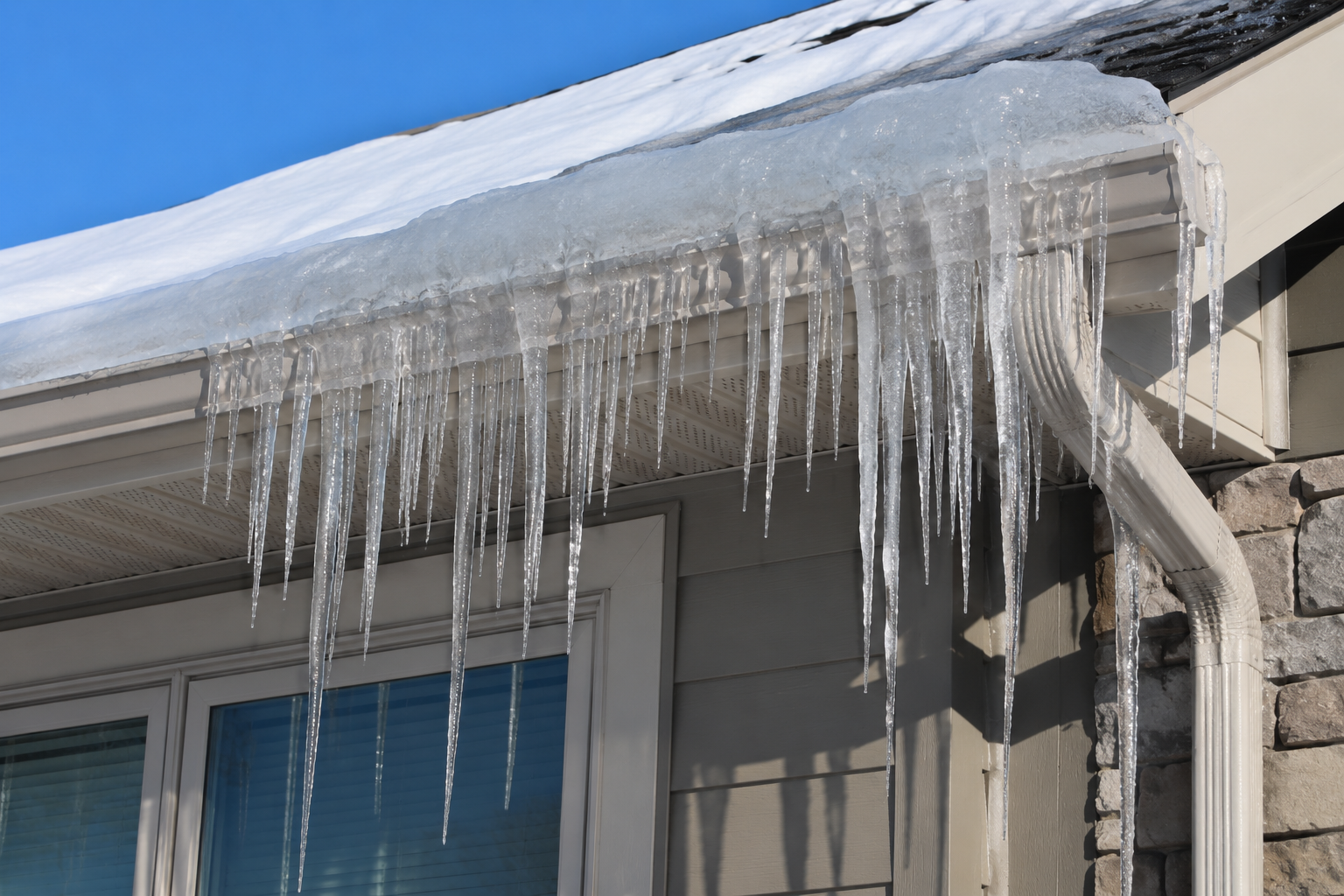
If you have spent a winter in Alberta, you have almost certainly seen them: the thick ridges of ice that build up along the eaves of a roof, sometimes with dramatic icicles hanging below, while snow sits heavy on the roof surface above. Ice dams look like a winter landscape feature but they are actually a symptom of a problem inside your home, and left unaddressed they cause some of the most expensive interior water damage a homeowner can face.
The frustrating part is that ice dams are entirely preventable. They are not a fact of life in cold climates. They are the predictable result of specific conditions inside your attic that, once corrected, do not recur. Understanding what those conditions are and how to address them is the key to getting off the ice dam cycle for good.
This guide covers what ice dams are, exactly how they form, what damage they cause, how to deal with them if you already have them, and most importantly how to prevent them from coming back.
What Is an Ice Dam and How Does It Form?
An ice dam is a ridge of ice that builds up at the edge of a roof, typically at the eaves, blocking meltwater from draining off the roof surface. Once that blockage is in place, water backs up behind the dam and sits on the roof surface in a pool. Water that is sitting on a roof rather than flowing off it will eventually find a way in, and that way in is almost always under the shingles and into the roof structure.
The process that creates an ice dam has three ingredients: snow on the roof, heat escaping from the living space into the attic, and cold outdoor temperatures at the eaves. When all three are present simultaneously, ice dams are almost inevitable.
Here is the sequence in detail. Heat from your living space rises through the ceiling and into the attic. If the attic is inadequately insulated, that heat warms the attic air and the underside of the roof deck. The warm roof deck melts the snow sitting on the roof above the attic space. The meltwater runs down the slope of the roof toward the eaves. At the eaves, the roof surface extends beyond the exterior wall of the house and is no longer warmed from below. The cold outdoor air keeps this section of roof at or below freezing. The meltwater reaches this cold zone and refreezes. Over repeated cycles of melting and refreezing, the ice builds up into a ridge that grows back up the roof slope and also hangs below the eave as icicles.
Once the dam is established, meltwater pooling behind it sits against shingles, under shingles, and eventually works its way through the roof deck. It appears inside the home as ceiling stains, wet insulation, mold growth in the attic, and in severe cases as water running down interior walls.
Why Alberta Homes Are Particularly Vulnerable
Ice dams require a combination of warm attic and cold eaves, and Alberta’s climate provides exactly those conditions through much of its winter. Overnight temperatures regularly drop well below minus twenty degrees Celsius while daytime temperatures sometimes climb above freezing, particularly in late winter and early spring. This temperature cycling produces repeated melt-and-refreeze events that build ice dams progressively through the season.
Alberta also receives significant snowfall that accumulates on roofs and provides the raw material for ice dam formation. A roof without snow cannot form an ice dam. A roof with a heavy snow load that is being warmed from below has everything it needs.
Older homes across the Edmonton and Parkland County region are particularly vulnerable because they were built to insulation standards that are well below what current building science recommends. A home built in the 1970s or 1980s with its original attic insulation is very likely operating with an attic that is significantly warmer than it should be, and ice dams in those homes are often a winter fixture until the insulation is addressed.
What Damage Do Ice Dams Cause?
The damage caused by ice dams ranges from cosmetic and manageable to structural and extremely expensive depending on how severe the dam is, how long it persists, and how quickly the resulting water infiltration is identified and addressed.
Shingle and Roofing Material Damage
The weight of ice building up at the eaves places significant stress on shingles, particularly at the point where the ice dam meets the roof surface. Shingles can be lifted, cracked, or torn as ice expands and contracts with temperature changes. The freeze-thaw action at the interface between the ice dam and the shingle surface is particularly destructive to the granule coating and the asphalt layer beneath it. Roofs that experience repeated ice dams over multiple winters accumulate this damage progressively, shortening the roof’s effective service life.
Gutter Damage
Ice dams frequently extend into and fill the gutters with ice. The weight of a full gutter loaded with ice can pull the gutter away from the fascia board, bend the gutter out of alignment, and tear the mounting hardware out of the fascia entirely. Gutters that have been damaged by ice dam loading often need to be replaced along with any fascia repair after the ice clears, turning what started as a ventilation and insulation problem into a full exterior repair project.
Water Infiltration and Interior Damage
This is where ice dam damage becomes truly expensive. Water that backs up behind an ice dam sits against the roof surface under conditions it was never designed for. Asphalt shingles shed water that flows over them. They are not designed to contain standing water or water that is actively being pushed under them by hydrostatic pressure from a pooling situation. Once water gets under the shingles, it reaches the roof deck, then the insulation, then the ceiling below.
Interior damage from ice dam water infiltration shows up as brown ceiling stains that spread over time, peeling paint on ceilings and upper walls, saturated attic insulation that loses its thermal performance and can develop mold, and in severe cases structural rot in the roof sheathing and framing members where water has been accumulating undetected for an extended period.
Mold growth in attics following ice dam infiltration is a particular concern because it can develop and spread significantly before it is discovered. By the time a homeowner notices a musty smell or visible mold on attic surfaces, the remediation required can be substantially more involved and expensive than it would have been had the source of the moisture been identified earlier.
Icicle Hazard
The icicles that form below a significant ice dam are a direct physical hazard. Large icicles falling from roof height can cause serious injury to anyone below, damage vehicles parked near the home, and create liability issues if they fall onto a public sidewalk or neighboring property. In Alberta, icicles of genuinely dangerous size are not uncommon on homes with significant ice dam formation.
How to Remove an Ice Dam Safely
If you already have ice dams on your roof this winter, the priority is limiting the water damage they are causing while avoiding actions that create additional damage or personal injury risk.
What Not to Do
Chopping or chiseling ice off the roof with an axe, ice pick, or similar tool is one of the most damaging things a homeowner can do in response to an ice dam. It invariably damages shingles and flashings in the process and creates new vulnerabilities in the roof surface at exactly the locations where water is already trying to get in. Pressure washing ice dams off the roof causes similar damage and also forces water under shingles under pressure. Neither approach addresses the underlying cause of the ice dam.
Walking on a snow and ice-covered roof in winter without proper equipment and experience is also genuinely dangerous. Falls from icy roofs cause serious injuries every year in Alberta. This is work for professionals with the right safety equipment.
Calcium Chloride Ice Melt
A safer DIY approach to managing an existing ice dam is to create channels through the dam using calcium chloride ice melt placed in a tube sock or mesh bag and laid perpendicular to the eave across the dam. As the calcium chloride slowly melts the ice around it, it creates a channel that allows pooled water to drain off the roof rather than continuing to back up behind the dam. This does not remove the ice dam entirely but it reduces the active water pooling and buys time until conditions allow for a proper fix.
Important note: use calcium chloride specifically, not rock salt or sodium chloride. Rock salt damages roofing materials, accelerates corrosion on gutters and flashings, and harms vegetation at the base of the home where the meltwater drains. Calcium chloride is effective at lower temperatures and significantly less damaging to surrounding materials.
Professional Steam Removal
The safest and most effective method for removing a significant ice dam is low-pressure steam removal performed by a roofing professional. Steam melts ice without the impact damage of chipping, does not require chemical application, and can be directed precisely at the dam without affecting surrounding shingles. It is not a cheap service but it is the option least likely to cause additional damage to a roof that is already under stress.
How to Prevent Ice Dams: The Permanent Solutions
Removing an ice dam addresses the symptom. Preventing ice dams requires addressing the cause, which is almost always a combination of insufficient attic insulation and inadequate attic ventilation. In some cases, air sealing of the ceiling plane is also a critical component.
Attic Insulation
The single most effective thing you can do to prevent ice dams is ensure your attic has adequate insulation to keep attic temperature close to outdoor temperature in winter. For Alberta homes, the current recommended minimum is R-50 in the attic, with R-60 preferred for new construction and major retrofits. Many older homes in the Edmonton and Parkland region have R-12 to R-30, which is far below what is needed to prevent the heat transfer that drives ice dam formation.
Blown-in insulation is the most practical way to bring an existing attic up to current standards because it can be added directly over existing insulation to any required depth without removing what is already there. The improvement in ice dam prevention is typically immediate and dramatic. Homeowners who have dealt with ice dams every winter for years frequently report that they disappear entirely after a proper insulation upgrade.
Attic Ventilation
Insulation addresses the heat loss from the living space, but proper attic ventilation is also essential for keeping the attic cold in winter. A well-ventilated attic allows cold outdoor air to flow in through soffit vents at the eaves, travel up through the attic space, and exit through ridge vents or roof vents near the peak. This continuous airflow keeps the attic temperature close to the outdoor temperature even when the living space below is warm.
Blocked soffit vents are one of the most common ventilation failures in Alberta attics. When blown-in insulation is added to an attic without proper baffles in place at the eaves, the insulation can cover and block the soffit vents, eliminating the cold air intake that the ventilation system depends on. A proper insulation installation always includes checking and maintaining clear airflow pathways at the eaves through properly installed baffles.
Air Sealing
Even a well-insulated attic can develop ice dam conditions if warm air from the living space is bypassing the insulation through gaps and penetrations in the ceiling plane. Pot lights, plumbing stack penetrations, attic hatches, and gaps around ceiling electrical boxes are all common air leakage pathways that allow warm moist air to enter the attic directly, warming the roof deck and contributing to ice dam conditions.
Air sealing these penetrations before adding insulation is a critical step that significantly improves the performance of the insulation upgrade. It also reduces the moisture load in the attic, which is important for preventing the condensation and mold growth that can develop in poorly air-sealed attics regardless of whether ice dams are a visible problem.
Ice and Water Shield Underlayment
For homes being re-roofed, installing an ice and water shield membrane across the eave area and in the valleys provides an additional layer of protection against water infiltration even if a modest ice dam does form. Ice and water shield is a self-adhering waterproof membrane that seals around fasteners and prevents water that backs up under shingles from reaching the roof deck. Alberta’s building code requires ice and water shield installation at the eaves for new roof installations, but many older roofs were installed without it or with a narrower application than current best practice recommends.
Ice and water shield is not a substitute for addressing the insulation and ventilation conditions that cause ice dams. It is a backup protection layer that limits damage if a small ice dam does form despite proper attic conditions. Relying on it as the primary ice dam solution while leaving the underlying causes unaddressed is not a long-term strategy.
How Kirkland Roofing and Exteriors Can Help
At Kirkland Roofing and Exteriors, we address ice dams as a whole-system problem rather than a roofing surface problem. Our approach includes assessing the attic insulation and ventilation conditions that are causing the ice dam formation, recommending the specific corrections needed whether that is blown-in insulation, ventilation improvements, or air sealing work, and addressing any roof damage that the ice dams have already caused.
We install blown-in insulation, repair damage from ice dam water infiltration, and when re-roofing is needed, install ice and water shield and proper ventilation systems as part of a complete roof assembly that is designed to perform in Alberta’s winter conditions. We serve homeowners across Parkland County, Edmonton, St. Albert, Spruce Grove, Stony Plain, Sherwood Park, and Fort Saskatchewan.
Final Thoughts
Ice dams are not an unavoidable consequence of living in Alberta. They are a building performance problem with well-understood causes and reliable solutions. The homes that deal with ice dams every winter are almost always homes with inadequate attic insulation or ventilation, and the homeowners who invest in addressing those conditions get to stop worrying about ice dams, lower their heating bills, and protect their roof and interior from a category of damage that compounds significantly over time.
If your home has had ice dam problems in past winters, do not wait for another season of damage before taking action. Contact Kirkland Roofing and Exteriors today for a free assessment of your attic and roofline. Call us at (780) 554-0397 or visit kirklandroofingandexteriors.ca. We serve Parkland, Edmonton, and all surrounding communities across Alberta.