
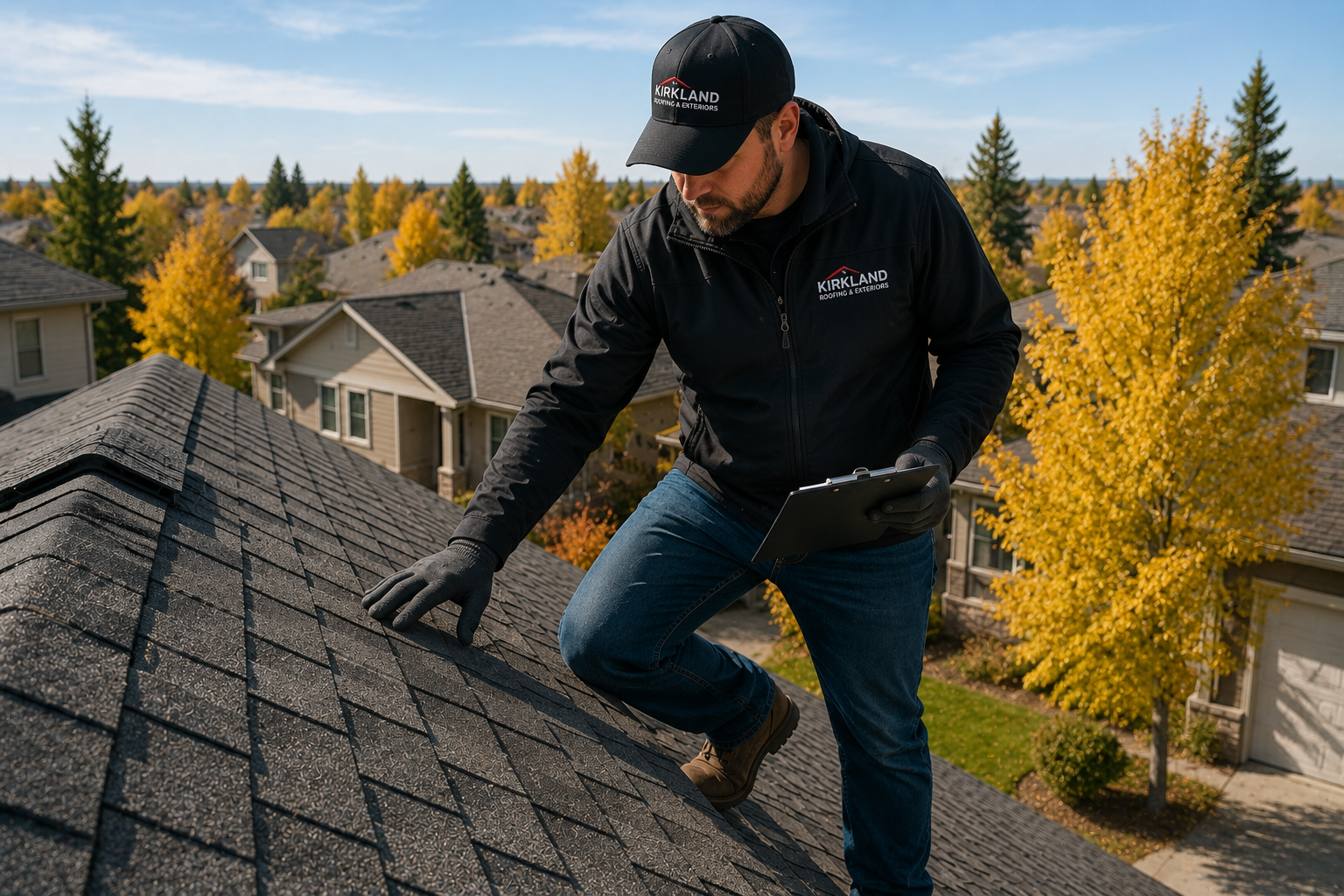
Alberta winters do not ease into things gradually. They arrive fast, they stay long, and the combination of heavy snowfall, extended freeze-thaw cycling, and temperatures that regularly push below minus twenty degrees Celsius puts your roof under sustained stress from the first snowfall through to spring thaw. A roof that is in good condition going into winter handles that stress without issue. A roof that has unresolved damage, blocked gutters, or compromised insulation going into winter will almost certainly turn a minor issue into a costly one by the time March arrives.
The good news is that pre-winter roof preparation is straightforward when you work through it systematically. Most of what needs to be done falls into a short list of inspections and tasks that, taken together, give your roof the best possible chance of coming through a full Alberta winter without problems.
This guide walks through that checklist item by item so you know exactly what to look for, what to address yourself, and when to call a professional before the snow arrives.
Why Pre-Winter Roof Preparation Matters in Alberta
Most roof problems that develop during winter started before the snow fell. A small crack in flashing that would have been a minor repair in September becomes a source of active water infiltration once ice and snowmelt are sitting against it. A gutter that was partially blocked with leaves in October becomes a source of ice dam formation in December when meltwater cannot drain and refreezes at the eaves. A shingle that was lifted but still in place in fall gets driven up further by wind-driven snow and eventually allows water under the roofing system.
Alberta’s climate accelerates all of these failure modes. The repeated freeze-thaw cycles of late fall and early spring expand any existing crack or gap as water infiltrates, freezes, and forces the opening wider. Heavy snow loads put stress on any structural weakness. The long duration of the cold season means problems that develop in November may not be discovered until March, by which point water damage to sheathing, insulation, and interior ceilings has been accumulating for months.
Addressing these issues before winter is almost always less expensive than addressing them after. A professional roof inspection in September or October costs a fraction of what remediation costs when water damage has progressed through a winter season.
The Pre-Winter Roof Preparation Checklist
- Inspect Your Shingles
Start with a visual inspection of your shingles from the ground using binoculars if needed, and if possible from the roof itself or by having a professional conduct a closer assessment. You are looking for:
- Missing shingles or shingles that have been lifted and are no longer lying flat against the roof deck
- Cracked, curling, or cupping shingles that indicate the material has reached or is approaching the end of its service life
- Shingles with significant granule loss that leaves the dark asphalt mat exposed
- Any areas where shingles appear discoloured, which can indicate moisture beneath the surface
- Shingles around chimneys, vents, and skylights that appear lifted or separated from adjacent flashing
Individual missing or damaged shingles can be replaced without a full roof replacement and are a straightforward repair when addressed before winter. The same damage left through an Alberta winter is an open invitation for water infiltration that may require significantly more extensive repair come spring.
- Check All Flashing Locations
Flashing is the metal sealing system at every joint, penetration, and transition on your roof, and it is responsible for more winter roof leaks than almost any other component. Before winter, check the flashing at:
- The chimney, particularly the mortar joints where counter flashing is embedded and the step flashing at the sides and back
- Roof valleys where two slopes meet and water concentrates
- All pipe penetrations including plumbing vents and exhaust outlets
- The eaves, where drip edge flashing directs water away from the fascia
- Any dormers or wall transitions where step flashing seals the roof-to-wall junction
- Skylights, where flashing on all four sides of the frame must remain watertight
Look for visible lifting, gaps, rust, or cracked sealant at any of these locations. Flashing repairs are significantly more accessible and affordable in fall than in mid-winter, and they eliminate one of the most common sources of winter water infiltration before it has a chance to cause damage.
- Clean and Inspect Your Gutters
Gutters need to be cleaned after the last significant leaf fall of the season and before the first sustained freeze. Gutters blocked with leaves, debris, and organic material cannot drain effectively, which creates the conditions for ice dam formation at the eaves and puts the added weight of waterlogged debris against the gutter mounting hardware.
While cleaning your gutters, also inspect them for:
- Sections that are pulling away from the fascia or sagging between hangers, which indicates either hanger failure or fascia rot behind the gutter
- Visible rust, holes, or separating joints that will allow water to run behind the gutter rather than through it
- Downspouts that are blocked or disconnected from the gutter above
- Downspout extensions that direct water away from the foundation rather than pooling at the base of the wall
A gutter that is clean, properly aligned, and draining effectively going into winter is one of the most reliable defences against ice dam formation. A blocked or damaged gutter system is one of the most reliable ways to guarantee ice dam problems before February.
- Check Your Attic Insulation and Ventilation
This is the item most homeowners skip because it involves going into the attic, but it is one of the most important checks on the list. The condition of your attic insulation and ventilation has a direct effect on whether your home develops ice dams, and on how much of your heating budget escapes through the roof rather than staying in your living space.
In your attic, check for:
- The depth and condition of existing insulation. Alberta homes should have a minimum of R-50 in the attic, and many older homes fall significantly short of this. If your insulation is clearly thin, compressed, or damaged by past moisture, a blown-in insulation top-up before winter is one of the highest-return investments you can make
- Blocked soffit vents at the eaves. Insulation that has drifted over the eave area and covered soffit vents eliminates the cold air intake that proper attic ventilation depends on. Baffles should be in place to maintain a clear airway from the soffit to the attic space
- Signs of past moisture or mold, which indicate that condensation has been developing in the attic and that air sealing and ventilation improvements may be needed
- The attic hatch itself, which should be insulated and weatherstripped to prevent warm air from the living space bypassing the ceiling insulation directly
If your home has had ice dam problems in past winters, this is the place to focus before the cold arrives. Ice dams are almost always caused by an attic that is too warm relative to outdoor temperatures, and that is almost always a result of insufficient insulation and inadequate ventilation. Addressing both before winter eliminates the problem rather than managing its consequences after the fact.
- Trim Overhanging Tree Branches
Trees that overhang your roof are a winter risk that is easy to overlook until a branch comes down. Alberta winters bring heavy, wet snow loads that cause branches to sag and sometimes snap, particularly on spruce and other coniferous trees whose dense foliage holds snow weight effectively. A large branch falling on your roof in the middle of winter creates structural damage and an immediate weather opening that is significantly more difficult and expensive to address in subzero conditions than it would be to prevent.
Before winter, have any branches that overhang or hang near your roofline trimmed back by a qualified arborist. A safe clearance of at least three metres between the roof surface and the nearest overhanging branch reduces both the risk of direct impact damage and the accumulation of leaf and needle debris in your gutters.
- Check Roof Penetrations and Vents
Every penetration through your roof is a potential entry point for cold air, moisture, and pests looking for warm shelter as temperatures drop. Before winter, inspect all roof vents, exhaust outlets, and pipe penetrations for:
- Damaged or missing vent caps that leave the opening exposed to weather and wildlife entry
- Cracked rubber boots around plumbing vent stacks, which are one of the most common and most overlooked sources of water infiltration in Alberta homes
- Attic vents that may have been blocked by debris or by insulation from inside
- Any gaps around penetrations where the seal between the pipe or vent and the surrounding roofing material has deteriorated
Rubber pipe boots in particular have a service life of roughly ten to fifteen years in Alberta’s climate before the rubber begins to crack and split. If your roof is in that age range and the boots have never been replaced, they are worth checking before winter rather than discovering a leak from a split boot in January.
- Inspect Your Soffit and Fascia
Soffit and fascia are part of the roofline system that protects the structural edge of your roof and provides the ventilation intake for your attic. Before winter, check for:
- Fascia boards that show signs of rot, soft spots, peeling paint, or water staining behind the gutter line
- Soffit panels that are cracked, sagging, or pulling away from the structure, which creates entry points for wildlife and moisture
- Soffit vents that are blocked by debris, paint, or displaced insulation inside the attic
- Any gaps at the junction of soffit and fascia where birds, squirrels, or bats may have entered the roofline space
Pests that access your roofline or attic space in late fall are looking for exactly what you have: a warm, sheltered environment for winter. Sealing any gaps before the cold arrives prevents a wildlife intrusion problem that is significantly more disruptive and expensive to resolve mid-winter than it is to prevent in fall.
- Schedule a Professional Inspection
Walking the ground around your home and looking up at your roofline gives you a general impression of its condition. A professional inspector on the roof gives you an accurate assessment of what is actually there. Many of the most significant issues on a residential roof, granule loss from hail, early-stage flashing failure, subtle shingle lifting, and blocked soffit vents, are not visible from ground level.
A pre-winter professional inspection typically takes an hour to an hour and a half and produces a clear picture of everything on the roof that needs attention before cold weather arrives. For roofs that are more than ten years old, that inspection is particularly valuable because the issues that develop on an aging roof are not always visible until they become active problems, and active problems discovered in November are always easier to address than active problems discovered in January.
What to Do If You Find Problems
If your inspection, either your own or a professional assessment, turns up issues that need attention, the priority order for fall repairs is straightforward. Address anything that represents an active or imminent water infiltration risk first: missing shingles, damaged flashing, failed pipe boots, and blocked or damaged gutters. These are the items most likely to produce interior damage through the winter if left unaddressed.
Cosmetic issues and items that do not create an immediate water risk can be assessed for priority based on their likelihood of deteriorating further through the winter. A shingle with significant granule loss but no current lifting or cracking may be watchable through the winter with a plan to address it in spring. A flashing location showing early rust and a deteriorating sealant bead is more likely to become an active leak before spring and is worth addressing now.
If your roof is approaching the end of its service life, fifteen to twenty years for asphalt shingles in Alberta’s climate, a pre-winter inspection that turns up multiple issues across the roof surface may indicate that a replacement is more cost-effective than continued repairs. A roofing professional can give you an honest assessment of whether you are at the point where repairs extend the roof’s useful life meaningfully or whether you are patching a system that will need full replacement in the near term regardless.
How Kirkland Roofing and Exteriors Can Help
At Kirkland Roofing and Exteriors, pre-winter roof inspections are one of the most common services we provide for homeowners across Parkland County, Edmonton, St. Albert, Spruce Grove, Stony Plain, Sherwood Park, and Fort Saskatchewan. Our inspections are thorough, documented, and honest, covering every item on this checklist plus a detailed look at the components that require an experienced eye to assess accurately.
When repairs are needed, we prioritize the work that most directly protects your home through the winter ahead. When a roof is in good condition and just needs a clean bill of health before the cold arrives, we tell you that clearly too. Our goal is to give you accurate information so you can make good decisions about your home, not to generate repair work that is not needed.
Final Thoughts
Preparing your roof for an Alberta winter is not a complicated process but it does require working through it systematically before the snow arrives rather than hoping things hold together until spring. The issues that cause the most expensive winter roof problems, failing flashing, blocked gutters, inadequate insulation, and damaged shingles, are all identifiable and addressable in fall before they become mid-winter emergencies.
Set aside time in September or October to work through this checklist, and if anything you find warrants a professional look, do not wait until the first frost has already arrived. The window for comfortable, effective roof work in Alberta closes quickly once winter sets in.
Contact Kirkland Roofing and Exteriors today to schedule your pre-winter roof inspection. Call us at (780) 554-0397 or visit kirklandroofingandexteriors.ca. We serve Parkland, Edmonton, and all surrounding communities across Alberta.