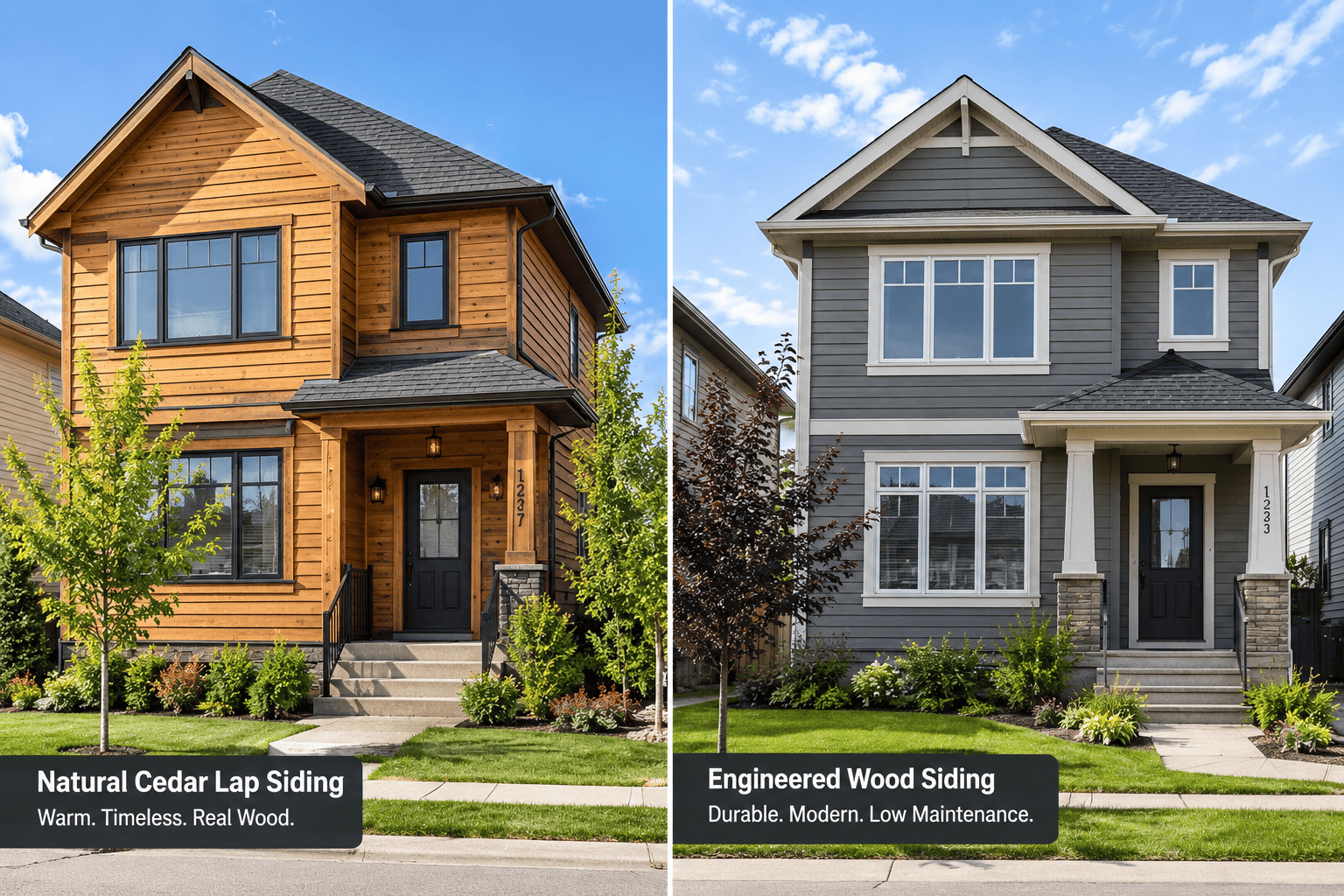
Wood has been used as exterior siding on homes across North America for centuries, and it remains one of the most visually appealing cladding options available. There is a warmth and authenticity to natural wood siding that no synthetic material has fully replicated. But natural wood also comes with a set of demands, in maintenance, in sensitivity to moisture, and in the specific challenges of Alberta’s climate, that make it a more complicated choice than its aesthetic appeal might suggest.
Engineered wood siding has emerged over the past two decades as an alternative that addresses many of the performance limitations of natural wood while preserving the visual character that makes wood appealing in the first place. It looks like wood, it can be painted and finished like wood, and it installs similarly to wood. But it is a manufactured composite product engineered for improved moisture resistance, dimensional stability, and longevity compared to its natural counterpart.
For homeowners in Alberta who want the wood aesthetic on their exterior, understanding the real differences between natural wood and engineered wood siding in our specific climate is essential before making a decision. This guide covers both products honestly, including the comparison that most suppliers avoid having because it does not always favour the more expensive option.
What Is Natural Wood Siding?
Natural wood siding is milled directly from timber, most commonly western red cedar, pine, spruce, or fir, and installed in profiles that include lap siding, board and batten, shiplap, channel rustic, and others. Each board carries the natural grain, knot patterns, and colour variation of the species it was milled from, which produces the authentic, one-of-a-kind appearance that natural wood is known for.
Cedar is by far the most common species used for exterior siding in Western Canada because of its natural resistance to moisture and insects relative to other species, its stability across a range of humidity conditions, and the beauty of its grain. Even cedar, however, requires regular maintenance to perform in Alberta’s climate. Left untreated, cedar will grey, check, and eventually rot as moisture penetrates the wood and freeze-thaw cycling accelerates the breakdown of the cellular structure.
Natural wood siding at its best, properly selected, properly installed, and consistently maintained, produces an exterior that is genuinely beautiful and that adds character and value to a home in ways that manufactured products struggle to match. The caveat is that achieving that result in Alberta requires a commitment to maintenance that many homeowners underestimate at the point of purchase.
What Is Engineered Wood Siding?
Engineered wood siding, also called composite wood siding, is a manufactured product made from wood fibre or strands combined with resins and binders, compressed under heat and pressure into panels or boards, and then finished with a factory-applied primer or texture coating. The most widely recognized brands in Canada include LP SmartSide and TruWood, both of which are broadly available through building supply channels and roofing and exterior contractors.
The manufacturing process allows engineered wood to be produced with more consistent dimensions than natural wood, without the knots and grain variations that can create weak points in natural lumber, and with moisture-resistant treatments integrated into the product rather than applied as an afterthought. The result is a product that resembles wood in appearance but behaves more predictably in the field and requires less maintenance to maintain that appearance over time.
Engineered wood siding is available in the same profiles as natural wood, including lap, board and batten, and panel configurations, and it accepts paint finishes that are visually indistinguishable from painted natural wood at conversational distances. The trade-off is that up close, the lack of natural grain variation and the manufactured texture profile distinguish it from the real thing.
How Each Material Performs in Alberta’s Climate
Alberta’s climate is the most important context for evaluating these two products. The combination of extreme cold, significant moisture from rain and snowfall, intense summer UV, frequent freeze-thaw cycling, and hail risk creates a more demanding environment for exterior wood products than most of Canada.
Natural Wood in Alberta’s Climate
Natural wood’s primary vulnerability in Alberta is moisture. Wood that absorbs moisture and then freezes expands as the water within its cellular structure turns to ice. Repeated freeze-thaw cycling causes this expansion and contraction to work at the cellular level, progressively breaking down the wood’s structure from the inside. Paint and sealant coatings that crack or fail to fully seal end grain and joints allow moisture to infiltrate, and once moisture is inside the wood, freeze-thaw cycling accelerates the damage dramatically.
Cedar’s natural oils provide some inherent moisture resistance but those oils diminish over time without regular maintenance. A cedar siding installation that was properly painted or stained and sealed at installation needs to be re-coated on a cycle of three to five years in Alberta’s climate to maintain the moisture barrier that protects the wood. End cuts, which are the most vulnerable points for moisture infiltration, need to be sealed at installation and inspected regularly.
Hail is an additional concern for natural wood siding in Alberta that does not apply to many other climates. Large hail can dent and split wood siding, creating moisture entry points and surface damage that accelerates weathering. Unlike vinyl or engineered products where hail damage is more cosmetic, damage to natural wood siding that is not repaired promptly allows moisture infiltration that can cause significant deterioration.
Engineered Wood in Alberta’s Climate
Engineered wood siding was specifically designed to address the moisture-related failure modes of natural wood. The manufacturing process treats the wood fibre with zinc borate, a fungicide and insecticide that resists mold, decay, and insect attack, and the resin binder system reduces the moisture absorption of the composite compared to solid wood. LP SmartSide, for example, is warranted against fungal decay for fifty years, which reflects confidence in the product’s moisture resistance that no natural wood product can match.
In Alberta’s freeze-thaw conditions, engineered wood’s reduced moisture absorption means it experiences significantly less expansion and contraction through temperature cycling than natural wood. This dimensional stability reduces the cracking and paint failure that allows moisture to infiltrate natural wood siding over time, and it means that engineered wood siding maintains its sealing integrity between maintenance cycles better than natural wood in the same conditions.
Engineered wood does still require painting and the paint system applied to it needs to be appropriate for wood composite surfaces. Factory-primed engineered wood accepts paint well and the topcoat has to be applied correctly and maintained over time, but the interval between repainting is typically longer than for natural wood because the substrate is more stable and less prone to the checking and movement that causes paint to fail on natural wood.
Head-to-Head Comparison
| Category | Natural Wood Siding | Engineered Wood Siding |
| Upfront Cost | Higher — premium material cost plus skilled installation | Moderate — less expensive than natural wood, more than vinyl |
| Appearance | Authentic, natural grain and character unique to each board | Realistic wood look; consistent profile without natural variation |
| Durability | Moderate — vulnerable to moisture, insects, and UV without maintenance | Good — engineered for moisture and impact resistance |
| Maintenance | High — regular painting, sealing, staining required | Moderate — periodic repainting every 8–12 years |
| Moisture resistance | Low without treatment; high risk in freeze-thaw conditions | Significantly better; treated for moisture resistance |
| Insect resistance | Vulnerable — especially cedar and pine without treatment | Better — composite structure resists pest penetration |
| Lifespan (Alberta) | 15–25 years with diligent maintenance | 25–35 years with standard maintenance |
| Best for | Heritage homes, custom builds, high-end aesthetics | Homes wanting wood look with improved performance and lower upkeep |
Cost: What Are You Actually Comparing?
Natural wood siding carries a higher material cost than engineered wood, and that gap is particularly significant for clear, knot-free cedar grades that produce the cleanest appearance. The installation labour cost for natural wood is also typically higher because natural wood requires more care in handling, cutting, and sealing to achieve a result that will perform well over time.
Engineered wood siding sits between vinyl and natural wood in upfront cost for most product grades, making it more accessible than premium natural wood while still delivering a wood aesthetic that vinyl cannot match. The long-term cost comparison shifts further in favour of engineered wood when maintenance cycles are factored in. Natural wood that requires repainting every three to five years with careful attention to end sealing and joint maintenance accumulates maintenance costs over a fifteen to twenty-five year service life that are meaningfully higher than engineered wood’s less frequent and less intensive maintenance requirements.
For homeowners thinking about long-term cost of ownership rather than just upfront installation cost, engineered wood’s combination of moderate purchase price, lower maintenance frequency, and longer Alberta-realistic service life typically represents better value than natural wood for most residential applications.
Appearance: Honest About the Difference
This is where natural wood genuinely wins and there is no point pretending otherwise. The grain character, the natural colour variation, the way wood weathers to a silver-grey patina if left unfinished, and the tactile quality of real wood are things that engineered wood approximates but does not replicate. On a heritage home, a custom build where architectural authenticity matters, or a project where the owner is genuinely committed to the maintenance natural wood requires, natural wood siding produces a result that has no manufactured equivalent.
For the majority of residential applications in Alberta, however, the visual difference between well-selected engineered wood siding and natural wood is not significant enough to justify the additional cost, maintenance demands, and performance limitations of natural wood in our climate. Engineered wood siding viewed from the street is convincing in its wood character, and the painted finish options available cover most of the colour palette that natural wood can achieve.
The appearance decision ultimately comes down to whether the authenticity of natural wood matters enough to the specific homeowner to justify what it takes to maintain it in Alberta’s climate. For some homeowners and some homes, the answer is yes. For most, engineered wood offers a better overall proposition.
Which Should You Choose?
Natural wood siding is the better choice if you own a heritage or character home where architectural authenticity matters, if you are prepared to commit to a consistent and diligent maintenance program including repainting on a three to five year cycle, if you are willing to pay the premium material and installation costs, and if you have a specific wood species or grade in mind that produces the aesthetic you are looking for and is not achievable with an engineered product.
Engineered wood siding is the better choice for most Alberta homeowners who want the visual character of wood without the maintenance demands and climate performance limitations of natural wood. It is particularly well suited to new builds and full siding replacements where a clean installation can be done correctly from the start, to homes in exposed locations where the additional moisture resistance of the engineered product provides meaningful protection, and to homeowners who want a long service life with predictable maintenance requirements.
If you are replacing siding on an older home that currently has natural wood and the wood has been high-maintenance or has had moisture-related issues, transitioning to engineered wood siding is often the more sensible long-term decision than replacing like for like.
How Kirkland Roofing and Exteriors Can Help
At Kirkland Roofing and Exteriors, we install both natural wood and engineered wood siding for homeowners across Parkland County, Edmonton, St. Albert, Spruce Grove, Stony Plain, Sherwood Park, and Fort Saskatchewan. We work with quality products from established manufacturers and we install them correctly, which in both cases means proper moisture management at end cuts and joints, appropriate fastening for the product and the substrate, and integration with the window and door flashing that the siding needs to work with as a complete system.
When homeowners come to us trying to decide between natural and engineered wood, we give them an honest assessment based on their home, their location, and their maintenance priorities rather than steering them toward whichever product produces a larger job for us. If natural wood is the right answer for your situation, we will tell you that and install it correctly. If engineered wood makes more sense, we will explain why and show you the product options available.
Final Thoughts
The choice between natural wood and engineered wood siding in Alberta comes down to authenticity versus practicality. Natural wood offers an aesthetic that cannot be fully replicated but demands consistent maintenance and accepts the climate-related performance limitations of a natural material. Engineered wood offers a convincing wood aesthetic with improved moisture resistance, dimensional stability, and lower long-term maintenance requirements that suit Alberta’s demanding climate better for most applications.
Neither product is the right answer for every situation, and the right choice depends on your home, your budget, your maintenance commitment, and what you value most in your exterior. If you want an expert opinion on which makes more sense for your specific situation, contact Kirkland Roofing and Exteriors today for a free consultation. Call us at (780) 554-0397 or visit kirklandroofingandexteriors.ca. We serve Parkland, Edmonton, and all surrounding communities across Alberta.